The growing demand for short-run production, rapid delivery and personalisation is directing print service providers towards different production methods. At the centre of this transformation are Direct-to-Film (DTF), which has attracted significant attention in recent years, and Direct-to-Garment (DTG), a technology that has been widely used across the industry for many years. While both technologies deliver high-quality results in textile printing, they differ significantly in terms of application areas, production processes and the advantages they offer to businesses. Many print service providers operating in the industry are now evaluating not only print quality but also production efficiency, application diversity and scalability when planning their investments.
The Rise of DTF Technology Draws Attention
DTF, regarded as one of the fastest-growing digital textile printing technologies of recent years, operates on the principle of printing a design onto a special film and then transferring it onto the final product.
Thanks to this system, prints can be applied to a very wide range of materials, including cotton, polyester, blended fabrics, leather and synthetic leather. The ability to prepare and store transfer films in advance also provides manufacturers with significant operational flexibility. Widely preferred for promotional products, sportswear, workwear and short-term campaign items, DTF technology has become an attractive option for small and medium-sized businesses thanks to its high production speed and limited space requirements. According to industry representatives, the key factors behind the rapid rise of DTF in recent years are its broad application versatility, lower production costs and suitability for mass production.
DTG Continues to Hold Its Ground
DTG technology, which has been used in textile printing for many years, continues to be preferred particularly because of the soft hand feel and high print quality it offers on natural fabrics.As the print is applied directly onto the fabric surface, products produced with DTG offer greater breathability while also delivering successful results in fine details and smooth colour transitions. However, the additional stages involved in the DTG production process, such as pre-treatment, printing and curing, can extend production times compared to DTF. For this reason, DTG technology is more commonly preferred for boutique production, premium products and on-demand customised printing applications.
Production Processes Determine Preferences
The choice between printing technologies is becoming increasingly dependent on the production model of each business. While DTF technology enables high-volume orders to be fulfilled with less operator intervention, DTG offers advantages in applications where fine detail and fabric feel are key priorities. Many companies in the industry are now turning to hybrid production models rather than relying on a single technology. This approach allows the flexibility of DTF and the premium print quality of DTG to be combined within the same production infrastructure. Experts predict that this hybrid approach will become even more widespread in the coming years.
A New-Generation DTF Approach from Mimaki
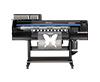
In parallel with the growth of the DTF market, technology manufacturers continue to develop new solutions. One of the most significant investments in this field has been made by Mimaki. The company’s TxF150-75 model, introduced in 2023, was developed to address issues such as colour consistency, white ink performance and production stability, which had limited the wider adoption of DTF technology.
Working together with Mimaki’s dedicated PHT50 ink set, the TxF Series is compatible with hot-peel, cold-peel, matte and glossy film types. The system is designed to deliver sharp details, high white opacity and consistent transfer quality. The company believes that the growth experienced in the DTF market will not be limited solely to textile applications and that new application areas such as UV-DTF will create additional opportunities for the industry.
The Technology That Best Meets Market Needs Will Be the Winner
The general consensus within the industry is that it is not possible to speak of a clear superiority between DTF and DTG.The choice of technology varies according to the type of products being produced, customer expectations, investment budgets and production capacity. At a time when demand for faster delivery, greater personalisation and broader application possibilities continues to grow, the success of print service providers will depend on how effectively they align their chosen technologies with market requirements. For this reason, rather than one technology dominating the future of the industry, flexible production models that combine the different strengths of both DTF and DTG are expected to become increasingly prominent.