In recent years, the textile sector has been undergoing a significant transformation not only in production but also on the material side. Increasing sustainability pressure, carbon footprint targets, and cost balance are directing manufacturers toward next-generation raw materials. The bioPEtex project carried out in Germany is one of the concrete examples of this search. Within the scope of the project, in which BB Engineering (BBE) is also involved, polyethylene (PE), which has so far had a limited role in textiles, is being reconsidered in its 100% bio-based form and developed for fiber production.
The search for an alternative to PET’s dominance
For many years, PET has been at the center of the chemical fiber market. Thanks to its durability, processability, and cost advantages, it has become the main material of the industry. However, the situation is no longer as clear as it used to be. Dependence on fossil-based raw materials, carbon emissions in production processes, and difficulties in recycling are leading the industry to question this structure again. Although biopolymers have come to the agenda, cost and scalability problems limit progress in this field.
An overlooked material comes back into focus
Polyethylene is actually not a new material. On the contrary, it is one of the most widely produced polymers in the world. However, it has not gained a strong place in textiles so far. The main reason for this is technical limitations. Low crystallization temperature, narrow processing window, and dyeing difficulties make the use of PE in fiber production difficult. The bioPEtex project focuses precisely on this point: developing processes that can overcome these limitations.
Prominent features of PE fibers
Studies show that PE can be a very attractive alternative for certain applications. In particular, the following properties stand out:
· Very lightweight structure
· High chemical resistance
· Good abrasion resistance
· Water-repellent and fast-drying surface
· Cooling effect during use
· Simple polymer structure suitable for recycling
These properties highlight PE especially for sportswear, outdoor products, and technical textiles.
Bio-based PE: Same performance, different source
One of the most striking aspects of bio-based PE is that it offers the same properties as its fossil-based equivalents in terms of performance. The difference lies entirely in the source of the raw material. Bio-PE, obtained from renewable resources such as sugarcane or corn, stands out with its lower carbon footprint. In addition, its low melting temperature offers the potential to reduce energy consumption, and its global availability provides an advantage in terms of cost.
Key point of the process: Texturizing technology
BB Engineering, which plays an important role in the project, focuses particularly on the development of the texturizing process. Texturizing is one of the most critical stages that determines the final performance of the fiber. Improvements made in this process play a decisive role in adapting PE to textile applications.
The project includes an end-to-end development process
The project is not limited to laboratory work; it includes an end-to-end development process:
· Development of bio-based PE raw material
· Optimization of spinning and texturizing processes
· Production of knitted fabrics and T-shirts as final products
This approach aims to directly transfer the developed material into application.
Initial results signal practical applicability
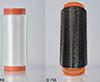
The first results obtained show that PE fibers are technically usable for textile applications. While the mechanical performance of the developed yarns is found to be sufficient, the cooling effect they provide during use draws attention, especially for sports textiles. At the same time, the design approach is also considered as part of the process to facilitate the recycling of products.
First product: Bio-PE T-shirt
One of the important stages of the project has been the production of the first bio-PE T-shirt. This step shows that the material is beginning to be ready not only for theoretical but also for practical applications. However, it is stated that further development work continues for the process to fully reach industrial scale.
The repositioning of polyethylene among textile fibers creates a new option especially for manufacturers seeking sustainability and cost balance. The results to be obtained in the later stages of the project will determine whether this material will gain a permanent place in the textile value chain.